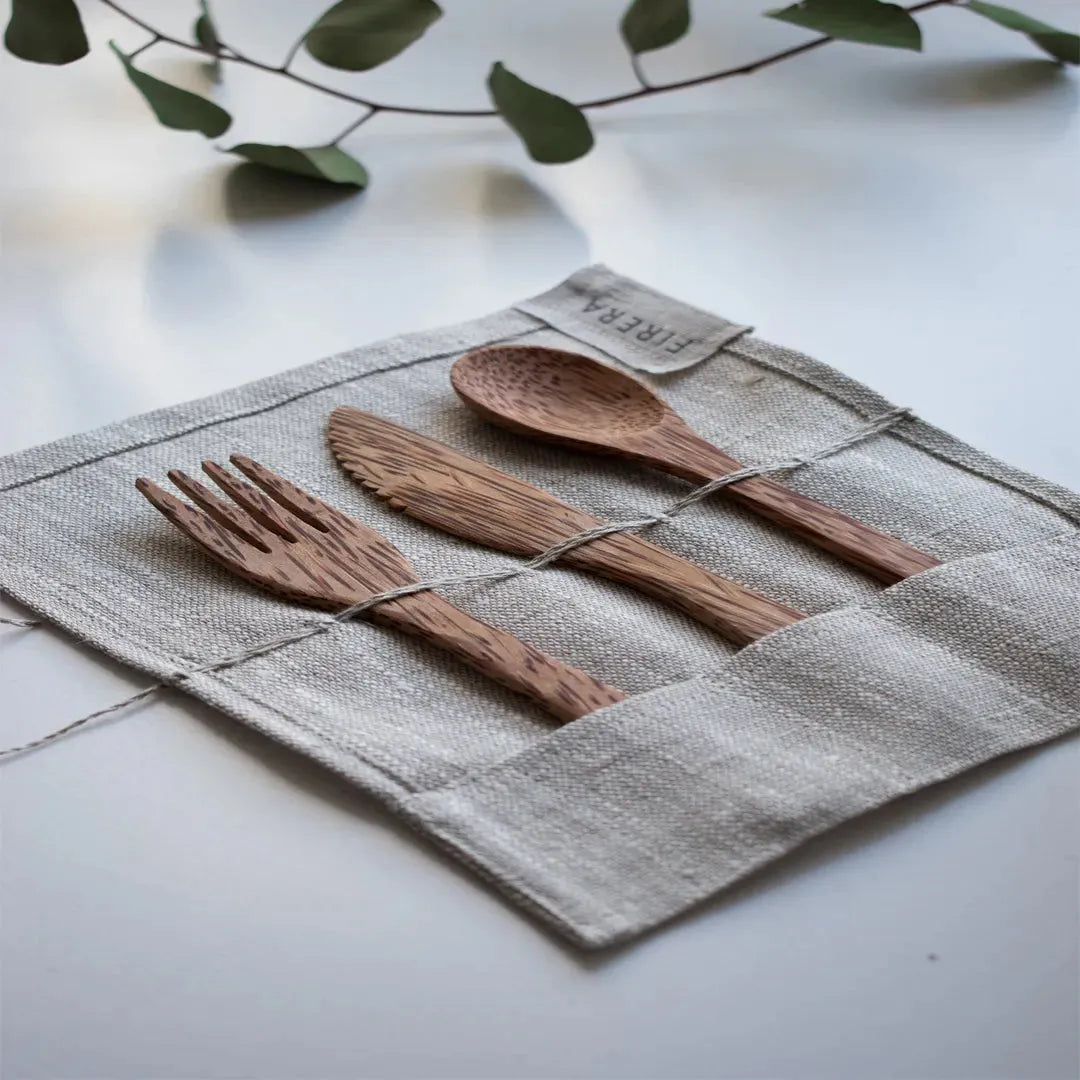

Manufacturers are now outdoing one another with a variety of fabrics, and customers are finding it difficult to get a clear picture. In this article, we’ll try to provide an overview of the most commonly used fabrics made from natural materials.
What is a natural fiber?
Natural fibers are fabrics derived directly from natural sources, such as cotton, wool, or linen. Their advantage: They feel pleasant against the skin.
Cotton
—the classic among upholstery fabrics—is a pure natural product that’s currently particularly popular for its rustic look in country or Scandinavian-style interiors and stands out for its breathability and durability.
However, cotton is prone to staining and wrinkling, so you should opt for a fabric with an appropriate coating or a blend of cotton with other materials. Removable cushion covers that can be put in the washing machine are also very practical.

Linen
has similar properties to cotton, but has a slightly coarser texture and a subtle sheen. As a purely natural product,
it is breathable and gentle on the skin. Because of its cooling effect, it’s especially popular in the summer. Visually, linen pairs well with all natural-inspired interior design styles, such as Modern Country or New Scandinavian.
For more information about linen fabrics, visit Leinenhaus.
Virgin Wool
Do you know the difference between wool and virgin wool?
Virgin wool comes from live animals and is of particularly high quality. Wool, on the other hand, can come from dead animals or be made from scraps of old textiles. Virgin wool is, therefore, the freshest wool, usually
taken directly from the fleece of sheep!
Wool covers give your upholstery an elegant and high-quality look. As a purely natural product, virgin wool has pleasant temperature-regulating properties and therefore never feels too warm or too cold against the skin. Virgin wool is breathable, antibacterial, and stain-resistant.

Learn more about the benefits of virgin wool at Wollhaus.
Blended Fabrics
: Viscose
Viscose is similar in structure to cotton and is also of natural origin—though it is manufactured artificially. Viscose is a semi-synthetic fiber. This means that while it is based on natural cellulose, the final product is produced through an artificial process. These fine fibers are used to produce artificial silk, also known as “rayon.” Viscose feels pleasantly soft, is gentle on the skin, and has a silky sheen.
For more information about viscose and its properties, visit Textilwirtschaft.
So which fabric is best for me?
As is often the case, the answer isn’t quite that clear. Ideally, we’d want all the advantages of different textiles without any of the drawbacks. This is also why manufacturers often combine different types of fabrics (blended fabrics). They combine natural and synthetic fabrics to achieve a comfortable feel with high durability. However, the type of fabric shouldn’t be the only deciding factor when making a choice. The weave and quality of the chosen material also play a decisive role. Certifications can help here as well, and we’ll discuss them in a later article.
For comprehensive advice on upholstery fabrics, checkbelstoffe.deoutMöbelstoffe.de.