
Does this sound familiar? You’re sitting at your desk, your to-do list is long, but your head feels heavy and your concentration is fading. We often attribute this to poor time management or lack of sleep. However, brain research shows that the design of your environment has a significant impact on how efficiently your brain works.
Welcome to the world of neurodesign. Here, you’ll learn how to use specific colors, materials, and textures to design your home office in a way that makes it easier to focus and reduces mental fatigue.
1. The Psychology of Color: Guidance for Your Brain
Colors aren’t just a matter of taste. They trigger measurable reactions in our brains and influence attention, calmness, and energy levels. In your home office, colors should therefore be used functionally, not merely for decoration.
| Color | Effect | Suitable for |
|---|---|---|
| Blue | Has a calming effect, reduces stress responses | Analytical tasks, focus-intensive work |
| Green | Reduces visual fatigue | Creative work, extended periods of concentration |
| Yellow | Energizing, can be motivating | Short-term bursts of energy, accents |
| Off-white | Calms, prevents overstimulation | A calm overall atmosphere |
Note: Too much red in your immediate field of vision can trigger stress responses and should be deliberately minimized in your home office.
2. Textures: Why Surfaces Have a Greater Impact Than We Realize
Our brains process information not only visually but also through the sense of touch—even when we merely see materials and do not touch them.
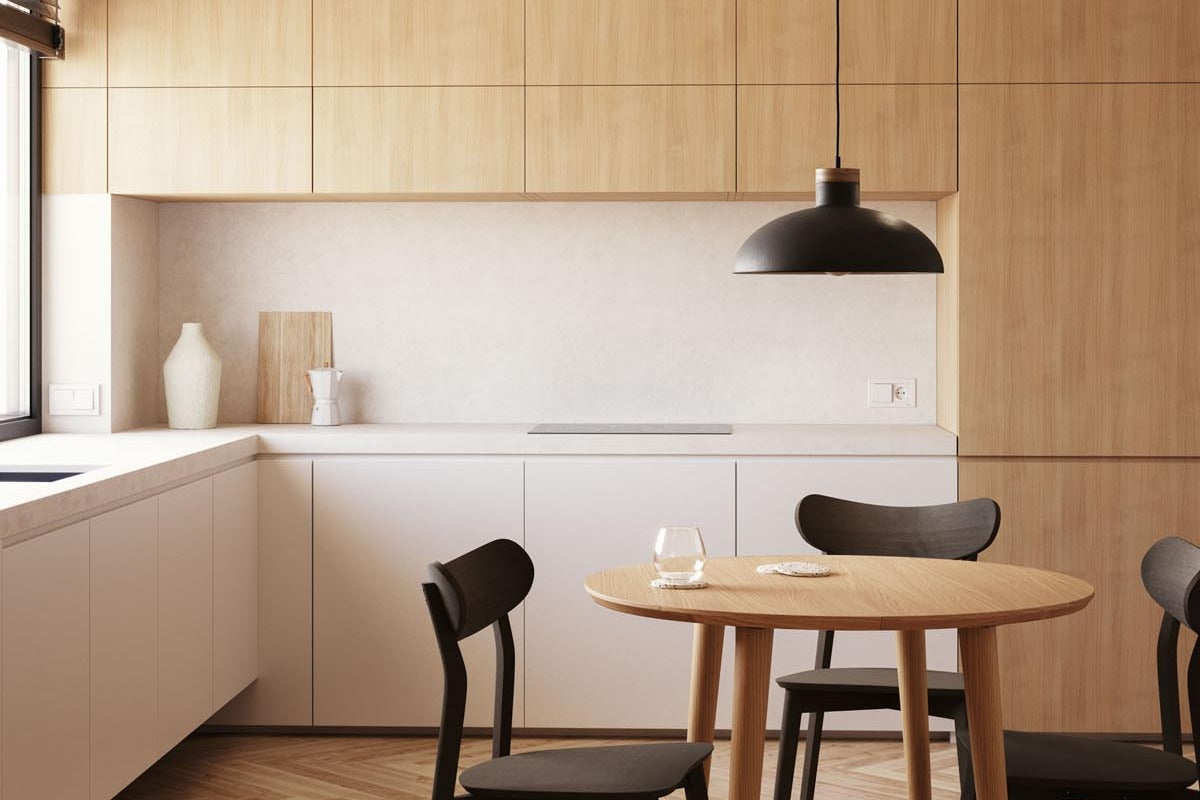
Smooth, highly reflective surfaces like glass or high-gloss finishes often come across as cool and distant. Natural textures, on the other hand, convey a sense of security and stability.
- Wood with visible grain has a calming effect
- ; textiles such as felt, linen, or wool improve acoustics and create a sense of space
, ; matte surfaces reduce visual clutter
, . These effects can be effectively , achieved— especially in workspaces , — with desks, , shelves , or sideboards made of natural materials.

3. Biophilia: Nature as a Concentration Booster
Neuro-design draws on the principle of biophilia: People respond positively to natural elements. Studies show that plants within one’s field of vision can increase concentration by up to 15 percent .
The green of the leaves has a regenerative effect without placing additional strain on the brain. Even a single plant on a shelf or next to your workspace can make a noticeable difference.
4. Light as Part of Neuro-Design
Light influences our circadian rhythm and our attention. In a home office , a combination of natural light and strategically placedlighting iscrucial.
Ideally, natural light should fall on the workspace from the side. In addition, a well-placedtable lampwith warm-n
5. Order as Mental Relief
Too many visual stimuli drain energy. Open shelves, cables, or varying colors draw our attention, even if we don’t consciously notice them.
Closed storage solutions help create a visually calming space. Furniture such assideboardsor low cabinets provide structure without dominating the room.
Conclusion: Small Adjustments, Big Impact
Neuro-design shows just how strongly colors, textures, and light influence our concentration. You don’t have to completely redesign your home office. Often, targeted adjustments are all it takes:
- calm, n
eUTRA l colors instead of stark contrasts - ; natural materials instead of smooth surfaces
- ; carefully designed lighting zones instead of uniform illumination
. When a space supports your brain, your mind works more efficiently. Good design isn’t a luxury—it’s a tool for everyday life.